
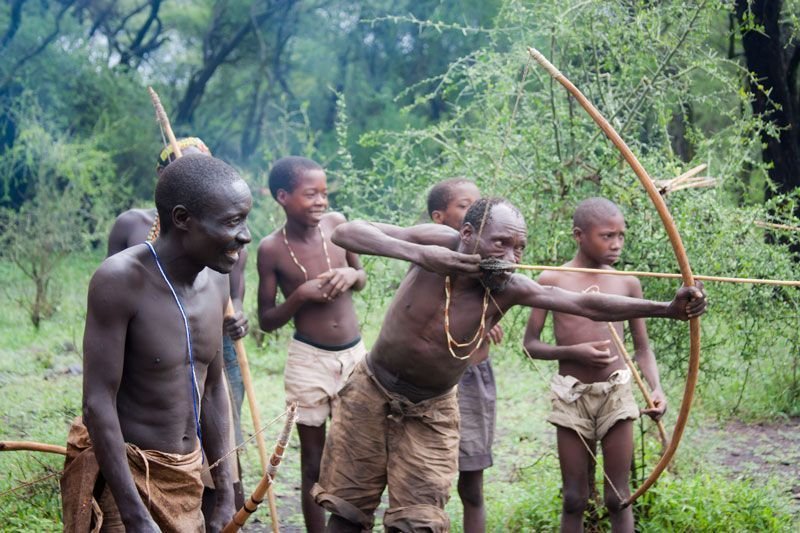
The Hadza or Hadzabe live mainly around Lake Eyasi and hold deep knowledge of plants, wildlife and dry-savannah territory. Some families continue hunting and gathering activities, while others combine different livelihoods. There is no single Hadza experience and no community is frozen in time.
What makes a visit responsible?
An encounter should be based on consent, local participation and transparent payment. The purpose is not to present people as a curiosity, but to understand part of their relationship with the land and listen to how hosts describe present-day life. Ask who receives payment and how much time the community wants to spend with visitors.
What the experience may include
Depending on the host group, season and day, there may be an interpretive walk, explanations of plants or a demonstration of skills. Hunting must not be promised or provoked for visitors. Nobody should be pressured to pose, open a home or repeat an activity.
Photography and behaviour
- Ask permission before every photograph or recording.
- Do not give money, food or gifts directly to children.
- Avoid invasive questions and descriptions such as “primitive”.
- Follow the guide and respect areas hosts do not wish to show.
- Carry water and sun protection, and leave no waste.
Lake Eyasi and safari planning
Visits normally operate from the Lake Eyasi area and can connect with Karatu or Ngorongoro. Road conditions make at least one nearby night preferable to a rushed return journey. Compare the context with Mbulu/Iraqw communities, Sukuma culture and the Usambara villages.
Careful local arrangements
Check dates and availability. We confirm the activity with local partners before placing it in an itinerary.

